Buoy Rules & Guidelines
To avoid violating the terms of our State Lands Lease, do not allow others to use your buoy or sublease a buoy to anyone or otherwise facilitate the use of your buoy in any way. Violations will risk losing current and future buoy privileges. If buoys are available for Cabin Renters, homeowners will be notified by email and the application will be posted on the RTO Website. If rental buoys are available, Cabin Renters must apply for their own buoy and provide the required documentation.
Buoy Season opens on May 22 (Friday of Memorial Day weekend) and closes on September 30th. RTO reserves the right to remove any boats left on buoys after September 30th and will charge the Homeowner for the cost of this removal and storage.
Maximum overall boat length including swim platforms and all other projections:
South Field: 26 feet, including the swim platforms
North Field: 22 – 25 feet*, including the swim platform option (*Note, there are limited buoys for 25’ boats)
This refers to actual boat length, which may be different than the way the boat is marketed by the manufacturers. For example, a Cobalt 252 is marketed as a 25’ boat but is actually 27’-7” with the swim platform option and is therefore too long for either Rubicon buoy field. Other examples include the Cobalt 250 (27’), Nautique G25 (27’-1.5”), and the Cobalt R7 Bowrider (27’-5”). RTO reserves the right to reject applications for boats exceeding the maximum lengths.
Maximum buoy/mooring line length: 12 feet. We strongly encourage using a mooring line snubber to reduce wear on your boat and buoy. An internet search using “mooring snubber or snubber twist” will provide many options.
Boat owners must be familiar with and comply with all federal, state and county regulations, including boat driver licensing.
Do not leave boats unattended at the pier or wait at length for your passengers when others are trying to get to the pier. Please cooperate if the Beach Attendant asks you to move your boat.
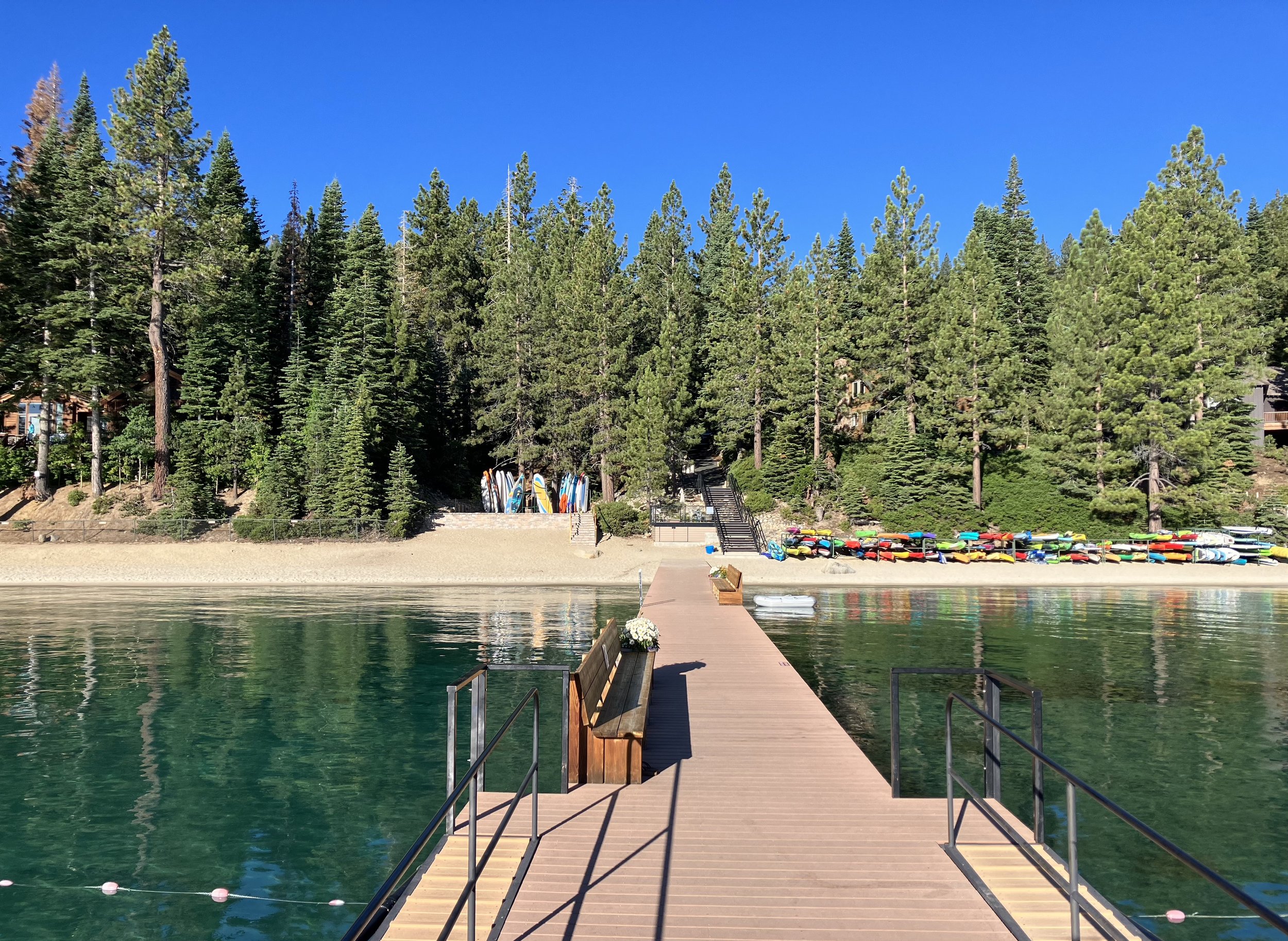
Do not leave the dinghy on your buoy. Use the dinghy for boat retrieval only, not for recreation, exercise or to entertain your guests or children. Stow the dinghy oars inside the dinghy (not left in the oar lock or hanging in the water) and make sure the dinghy is securely attached to the designated/ labeled dinghy post at the end of the pier after you are done using it.
Do not leave recreational equipment attached to your boat while moored. This extends the area needed and makes navigating the buoy field difficult for other boats.
RTO must have a current insurance certificate for your boat that meets all minimum requirements before a buoy is assigned. See checklist for requirements.
If the Boat Owner is different from the Homeowner, the RTO reserves the right to review the Buoy Application to ensure compliance with the State Lands Lease terms. Buoy rentals are only available to homeowners and their immediate family (not cousins, uncles, nieces, friends, etc.).
Homeowners must be current and in good standing on their annual RTO assessments to be eligible for a buoy.
It is your responsibility to verify that your boat has been put on the proper buoy. If your boat is not on the proper buoy, we will move your boat to the proper buoy and the homeowner will be billed for the cost.